
Cooking technique · Happy Yumi · 4 min
Basic Cooking Techniques Explained Simply
Boiling, sautéing, baking, braising, and steaming are the five pillars of almost any recipe. Understanding what each method does to food —temperature, moisture, time— lets you improvise and correct without relying on memory.
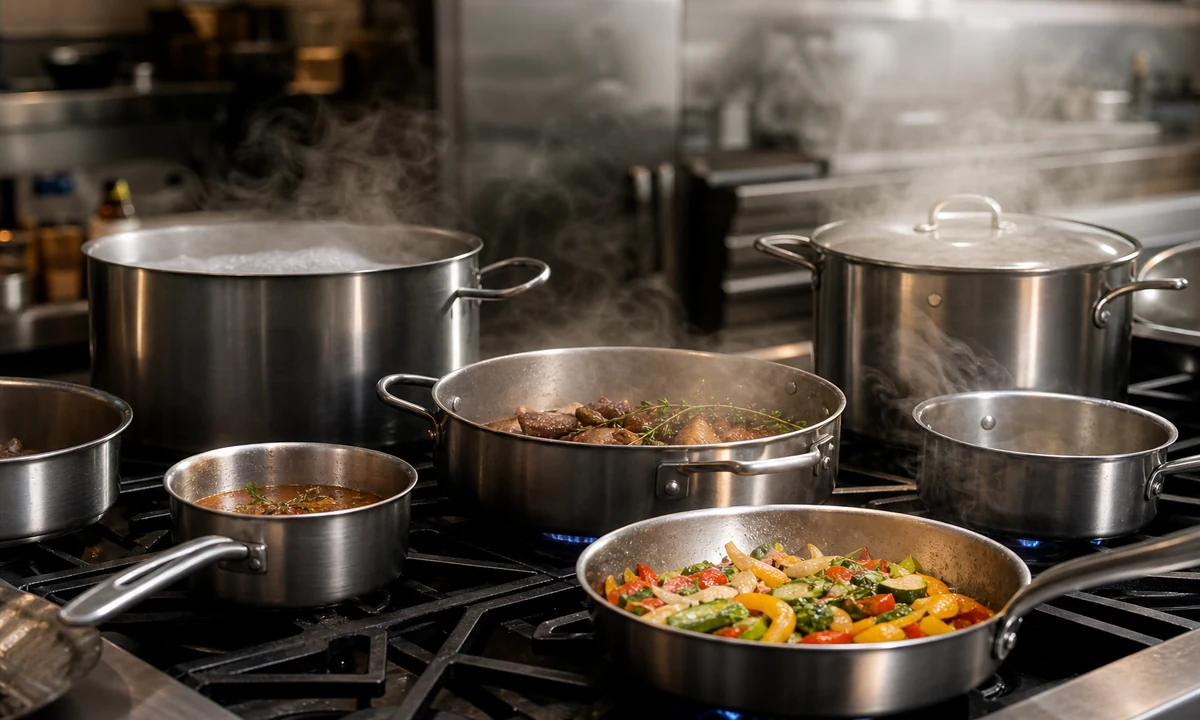
Water and steam cooking
Boiling submerges food in water at 100 °C; ideal for pasta, eggs, legumes, and firm vegetables. Simmering keeps small bubbles, better for stocks and fibrous meats. Steam cooks with water vapor without submerging, preserving color and vitamins in vegetables and fish.
Blanching is brief boiling followed by an ice shock, useful for peeling or setting color. Salt in pasta water seasons inside; for vegetables use little salt if you want to control sodium.
- Boil: 100 °C, pasta and legumes.
- Simmer: stocks and stews.
- Steam: gentle, little oil.
Dry cooking with fat
Sautéing uses little fat and high heat with constant movement; food browns outside and stays tender inside. Deep frying submerges food in hot oil; the surface seals fast. Sweating is medium heat, longer time, to develop sweetness in onion and stew bases.
Sauté in batches so the pan does not lose temperature and boil instead of brown. Oil should shimmer but not smoke before adding ingredients.
Oven, grill, and stews
Baking uses hot dry air; ideal for bread, pastries, and whole roasts. Grilling or searing applies intense direct heat and marks. Braising combines initial browning with liquid and slow cooking until tender.
Braise: sear protein, add liquid to half height, cover and cook low. The result is meat that falls apart and concentrated sauce.
- Oven: enveloping dry heat.
- Grill: direct heat and marks.
- Braise: brown + liquid + time.
Choosing the right method
Ask: do I want crisp or tender? Clean or concentrated flavor? Fast or slow? A steak wants a hot pan; a whole breast wants oven or braise.
Combine methods: sear chicken in a pan and finish in the oven for juiciness and crisp skin. Note which method each recipe you like uses and patterns will appear.
Editorially reviewed article · Happy Yumi · ZBMProject