
Cacio e pepe is one of the oldest recipes of Roman cuisine, born as a sustenance for the shepherds of Lazio who brought cured cheese and pepper on their travels through the Apennines. Its apparent simplicity hides a precise emulsification technique that makes it an icon of Italian cucina povera. Today it is an emblematic dish of Roman trattorias and a world reference for minimalist pasta.
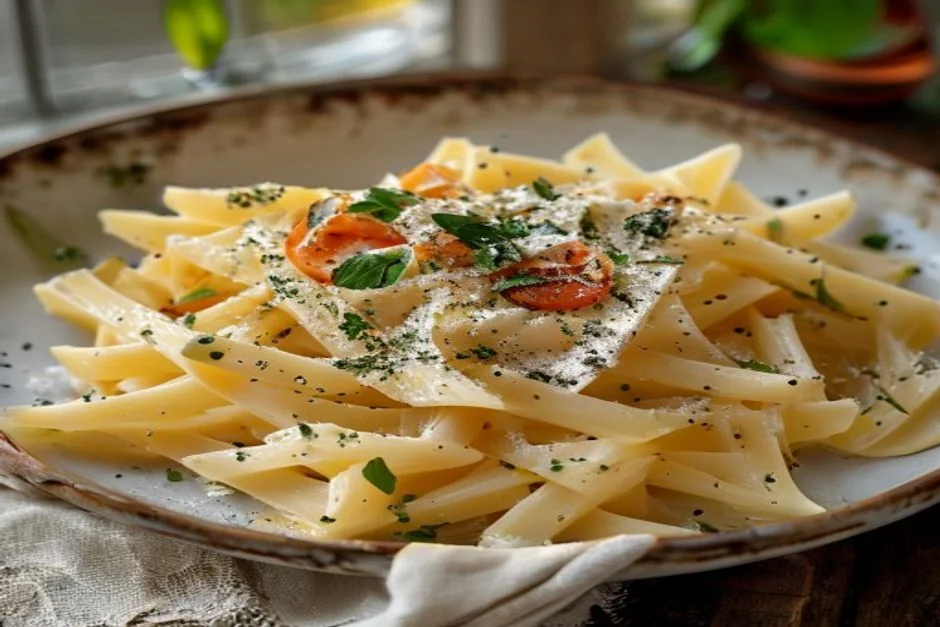
Italian
CACIO E PEPE
Authentic recipe for cacio and Roman pepper with pecorino cheese and toasted black pepper.
- Italy
- MAIN COURSES
- Vegetarian
- High protein
- medium
10 min
Tiempo de Preparación
4
Servings
Nutrición por ración
- Calories 520 kcal
- Protein 22 g
- Fiber 2.5 g
- Carbohydrates 62 g
- Fat 20 g
- Sodium 680 mg
Story behind the dish
Preparation
Cacio e Pepe is a preparation from Italy with medium difficulty. Reserve about 25 minutes in total (10 for mise en place and preparation, 15 for cooking). Follow the 6 phases in order: each step indicates what to do, what to observe and, when applicable, the time or level of fire.
Before you start
- Have ready: 400 g of spaghetti or tonnarelli.
- Have ready: 200 g of grated Pecorino Romano cheese.
- Have ready: 2 teaspoons black peppercorns.
- Have ready: Coarse salt for the cooking water.
- Have ready: 30 ml of reserved cooking water.
- Salt, oil and spices measured and within reach.
- Clean utensils, board and clear work surface.
-
Toast the black peppercorns in a large skillet over medium heat…
Toast the black peppercorns in a large frying pan over medium heat for 2 minutes until they release their aroma, then crush lightly in a mortar.
-
Cook the pasta in plenty of water with coarse salt until al dente.
Cook the pasta in plenty of water with coarse salt until al dente, reserving at least a glass of the starchy cooking water. Taste before serving: the balance between salt, acidity and fat defines the final result.
Taste before serving: the balance between salt, acidity and fat defines the final result
-
In a large bowl
In a large bowl, mix the grated pecorino with a few tablespoons of the warm cooking water until forming a thick, homogeneous cream. Reduce heat to medium so that the liquid concentrates flavor without burning the bottom.
Reduce heat to medium so that the liquid concentrates flavor without burning the bottom.
-
Add the drained pasta directly to the pan with the pepper...
Add the drained pasta directly to the pan with the toasted pepper and sauté for 30 seconds over low heat. Work in batches if skillet is full; too much load generates steam and cooks instead of sautéing.
Work in batches if skillet is full; too much load generates steam and cooks instead of sautéing
-
Remove the pan from the heat and pour in the pecorino cream.
Remove the pan from the heat and pour in the pecorino cream, stirring vigorously and adding cooking water little by little until you obtain a silky sauce that envelops each strand of pasta.
-
Serve immediately on hot plates with freshly ground pepper…
Serve immediately on hot plates with freshly ground pepper and pecorino flakes on top.
Chef's tips
- Test for salt and doneness before serving; the last adjustment makes the difference.
- Use fresh and seasonal ingredients: the quality of the product is noticeable in the final result.
Variations
- Version with whole wheat pasta for more fiber.
- Version with a mixture of pecorino and parmigiano.
Community
Kitchen conversations
Share how it turned out, ask questions, or reply to other cooks.
Be the first to share your experience with this recipe.