
Korean dish with centuries of tradition, possibly originated as a way to use up leftover rice and vegetables, bibimbap (
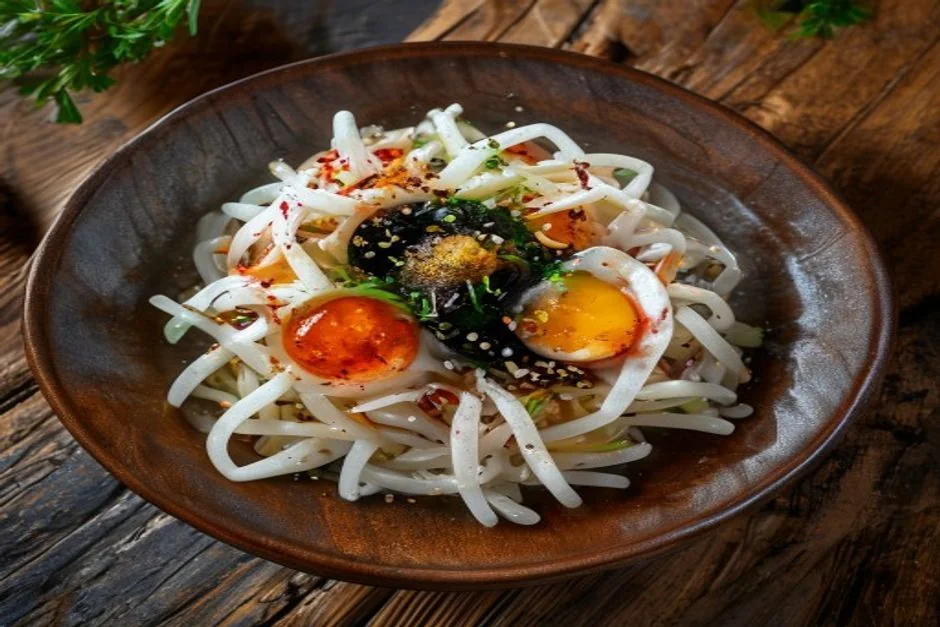
Asian
Bibimbap
Bibimbap coreano tradicional con arroz, verduras salteadas y gochujang, receta paso a paso.
- South Korea
- Main course
- High protein
- medium
30 min
Tiempo de Preparación
4
Servings
Nutrición por ración
- Calories 520 kcal
- Protein 28 g
- Carbohydrates 58 g
- Fat 20 g
Story behind the dish
Preparation
Bibimbap is a South Korean preparation with medium difficulty. Reserve about 50 minutes in total (30 for mise en place and preparation, 20 for cooking). Follow the 6 phases in order: each step indicates what to do, what to observe and, when applicable, the time or level of fire.
Before you start
- Have ready: 400 g of cooked rice.
- Have ready: 200 g of beef in thin strips.
- Have ready: 1 carrot.
- Have ready: 1 zucchini.
- Have ready: 100 g of spinach.
- Salt, oil and spices measured and within reach.
- Clean utensils, board and clear work surface.
-
Marinate the beef with soy sauce
Marinate the beef with soy sauce, garlic and a little sesame oil for 15 minutes. Go slowly and confirm texture, aroma and color before moving to the next step. Go slowly and confirm texture, aroma and color before moving to the next step.
Go slowly and confirm texture, aroma and color before moving to the next step.
-
Separately sauté the julienned carrot
Separately sauté the julienne carrot, julienne zucchini and blanched bean sprouts, each with a pinch of salt and sesame oil. When it comes to a boil, adjust the heat to maintain a constant bubbling, not an uncontrolled boil. When it comes to a boil, adjust the heat to maintain a constant bubbling, not an uncontrolled boil.
When it comes to a boil, adjust the heat to maintain a constant bubbling, not an uncontrolled boil.
-
Blanch the spinach
Blanch the spinach, drain and season with garlic, salt and sesame oil. When it comes to a boil, adjust the heat to maintain a constant bubbling, not an uncontrolled boil. When it comes to a boil, adjust the heat to maintain a constant bubbling, not an uncontrolled boil.
When it comes to a boil, adjust the heat to maintain a constant bubbling, not an uncontrolled boil.
-
Sauté the marinated beef over high heat until golden brown
Sauté the marinated beef over high heat until golden brown. Look for a uniform golden color; The seal concentrates flavor and prevents it from releasing too much liquid later. Watch the exact point indicated; An extra minute can alter the result. Look for a uniform golden color; The seal concentrates flavor and prevents it from releasing too much liquid later. Watch the exact point indicated; An extra minute can alter the result.
Look for a uniform golden color; The seal concentrates flavor and prevents it from releasing too much liquid later.
-
Fry the eggs leaving the yolk liquid
Fry the eggs, leaving the yolk liquid. Don't overcrowd the pan: the oil should be hot but not smoking. Don't overcrowd the pan: the oil should be hot but not smoking.
Don't overcrowd the pan: the oil should be hot but not smoking.
-
Serve the rice in a bowl
Serve the rice in a bowl, arrange the vegetables and meat around it in sections, top with the fried egg and a spoonful of gochujang. Mix everything before eating. Serve on a preheated plate or platter if the dish must maintain temperature. Serve on a preheated plate or platter if the dish must maintain temperature.
Serve on a preheated plate or platter if the dish must maintain temperature.
Chef's tips
- Serve in a hot stone bowl (dolsot) if you have one, so that the rice on the bottom is crispy.
- Each vegetable is seasoned separately, it is key to the balance of flavors in the dish.
Variations
- Vegetarian bibimbap (without meat)
- Dolsot bibimbap (version with hot stone bowl)
Community
Kitchen conversations
Share how it turned out, ask questions, or reply to other cooks.
Be the first to share your experience with this recipe.