
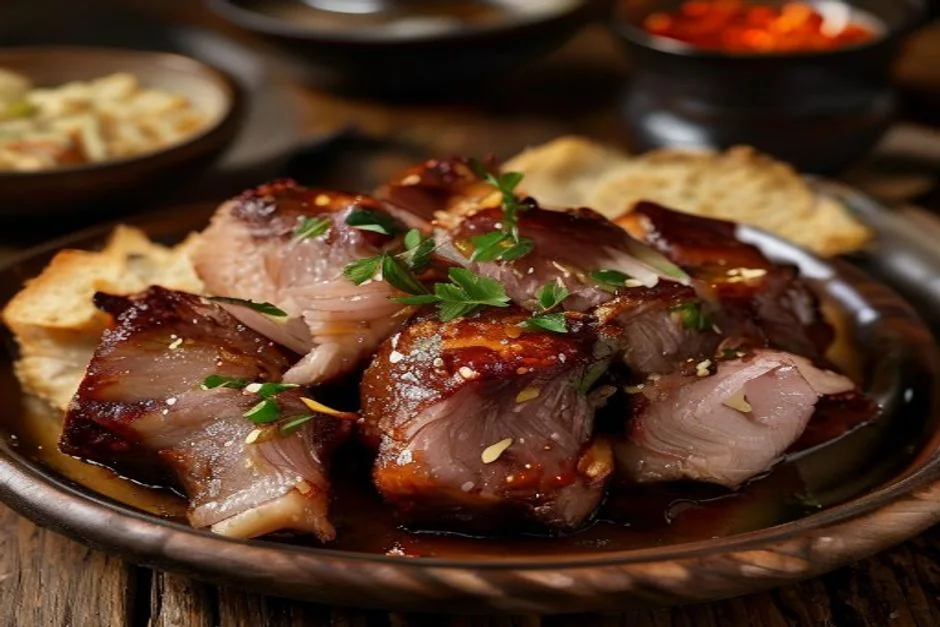
Bossam is boiled pork belly served in lechilla leaves, traditionally associated with family kimchi-making day. The soft fat of boiled pork contrasts with fresh kimchi and ssamjang. In Seoul, chains like Sinsaeng Bossam popularized this gastronomic ritual.
Asian
pork bossam
South Korean pork bossam: traditional step-by-step recipe, with chef tips and clear timings.
- South Korea
- MAIN COURSES
- High protein
- medium
25 min
Tiempo de Preparación
6
Servings
Nutrición por ración
- Calories 520 kcal
- Protein 28 g
- Fiber 1 g
- Carbohydrates 8 g
- Fat 42 g
- Sodium 760 mg
Story behind the dish
Preparation
Pork bossam is a South Korean preparation with medium difficulty. Reserve about 115 minutes in total (25 for mise en place and preparation, 90 for cooking). Follow the 6 phases in order: each step indicates what to do, what to observe and, when applicable, the time or level of fire.
Before you start
- Have ready: 1.2 kg pork belly with skin.
- Have ready: 1 large onion.
- Have ready: 10 cloves of garlic.
- Have ready: 2 chives.
- Have ready: 2 bay leaves.
- Salt, oil and spices measured and within reach.
- Clean utensils, board and clear work surface.
-
Place the bacon in a large pot with onion
Place the bacon in a large pot with onion, garlic, chives, bay leaf and ginger.
-
Cover with water
Cover with water, add sake and bring to a boil; foam and cook 80 minutes.
-
Remove the meat and let it cool slightly; cut into thin slices
Remove the meat and let it cool slightly; cut into thin slices.
-
Arrange the meat on a tray with lettuce
Arrange the meat on a tray with lettuce, perilla, kimchi and ssamjang.
-
Each bite is wrapped in leaf with sauce and a piece of pickled garlic
Each bite is wrapped in leaf with sauce and a piece of pickled garlic.
-
Serve with soju or makgeolli as a traditional pairing
Serve with soju or makgeolli as a traditional pairing.
Chef's tips
- Test for salt and doneness before serving; the last adjustment makes the difference.
- Use fresh and seasonal ingredients: the quality of the product is noticeable in the final result.
Variations
- Vegetarian version replacing the meat with sautéed mushrooms or cooked legumes.
Community
Kitchen conversations
Share how it turned out, ask questions, or reply to other cooks.
Be the first to share your experience with this recipe.