
Gamjatang is a hearty pork backbone and potato soup originally from Jeolla province. Its spicy red broth is comforting in winter and is shared at the table with friends. The name combines gamja (potato) and tang (soup), although the backbone meat is the protagonist.
Asian
Gamjatang
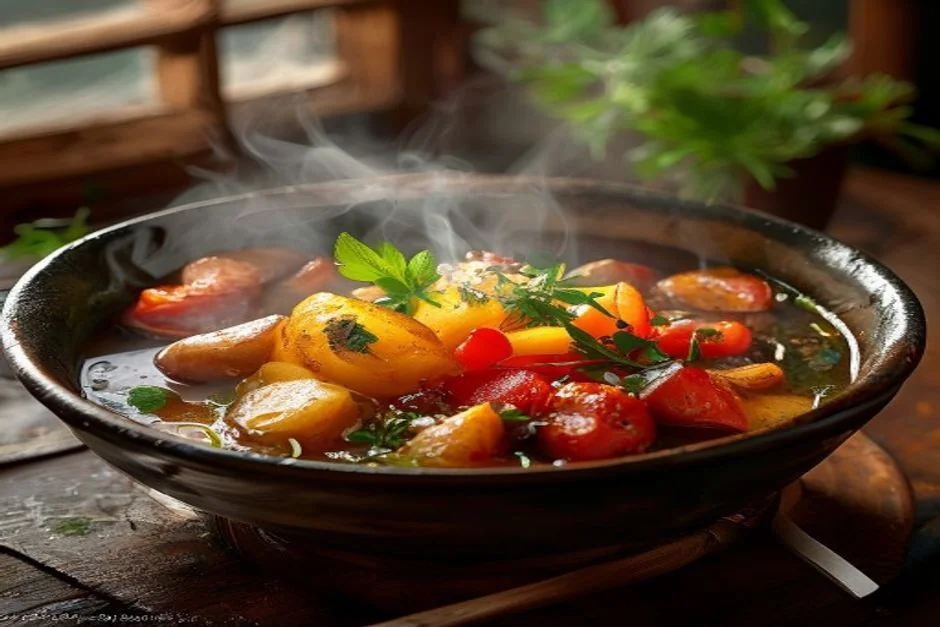
Korean Gamjatang: spicy pork backbone, potato and cabbage soup.
- South Korea
- MAIN COURSES
- High protein
- medium
30 min
Tiempo de Preparación
6
Servings
Nutrición por ración
- Calories 445 kcal
- Protein 32 g
- Fiber 4 g
- Carbohydrates 28 g
- Fat 22 g
- Sodium 920 mg
Story behind the dish
Preparation
Gamjatang is a South Korean preparation with medium difficulty. Reserve about 120 minutes in total (30 for mise en place and preparation, 90 for cooking). Follow the 6 phases in order: each step indicates what to do, what to observe and, when applicable, the time or level of fire.
Before you start
- Have ready: 1.5 kg of pork bones with meat (backbone).
- Have ready: 3 large potatoes, cut into pieces.
- Have ready: 200 g of chopped cabbage.
- Have ready: 4 tablespoons gochugaru.
- Have ready: 2 tablespoons gochujang.
- Salt, oil and spices measured and within reach.
- Clean utensils, board and clear work surface.
-
Soak the bones for 1 hour in cold water; drain and boil 10 minutes
Soak the bones for 1 hour in cold water; Drain and boil for 10 minutes, discarding water.
-
Cover with clean water
Cover with clean water, bay leaf and ginger; Cook for 60 minutes over medium heat.
-
Mix gochugaru
Mix gochugaru, gochujang, soybean paste and garlic for the spicy paste.
-
Add potatoes and spicy paste to the pot; cook 20 more minutes
Add potatoes and spicy paste to the pot; cook 20 more minutes.
-
Add cabbage and green onions; cook 10 minutes until tender
Add cabbage and green onions; cook 10 minutes until tender.
-
Serve the abundant broth with loose meat.
Serve the abundant broth with detached meat, perilla and white rice.
Chef's tips
- Test for salt and doneness before serving; the last adjustment makes the difference.
- Use fresh and seasonal ingredients: the quality of the product is noticeable in the final result.
Variations
- Vegetarian version replacing the meat with sautéed mushrooms or cooked legumes.
- Version with whole wheat pasta or brown rice for greater fiber content.
- Mild version by reducing chilies and hot spices by half.
Community
Kitchen conversations
Share how it turned out, ask questions, or reply to other cooks.
Be the first to share your experience with this recipe.