
Cooking technique · Happy Yumi · 4 min
How to Thicken a Sauce Without Altering Flavor
A sauce that is too thin weakens the dish; thickening it wrong leaves raw flour taste or gelatinous texture. The key is choosing the thickener for the sauce and cooking it long enough for starch or protein to do its job.
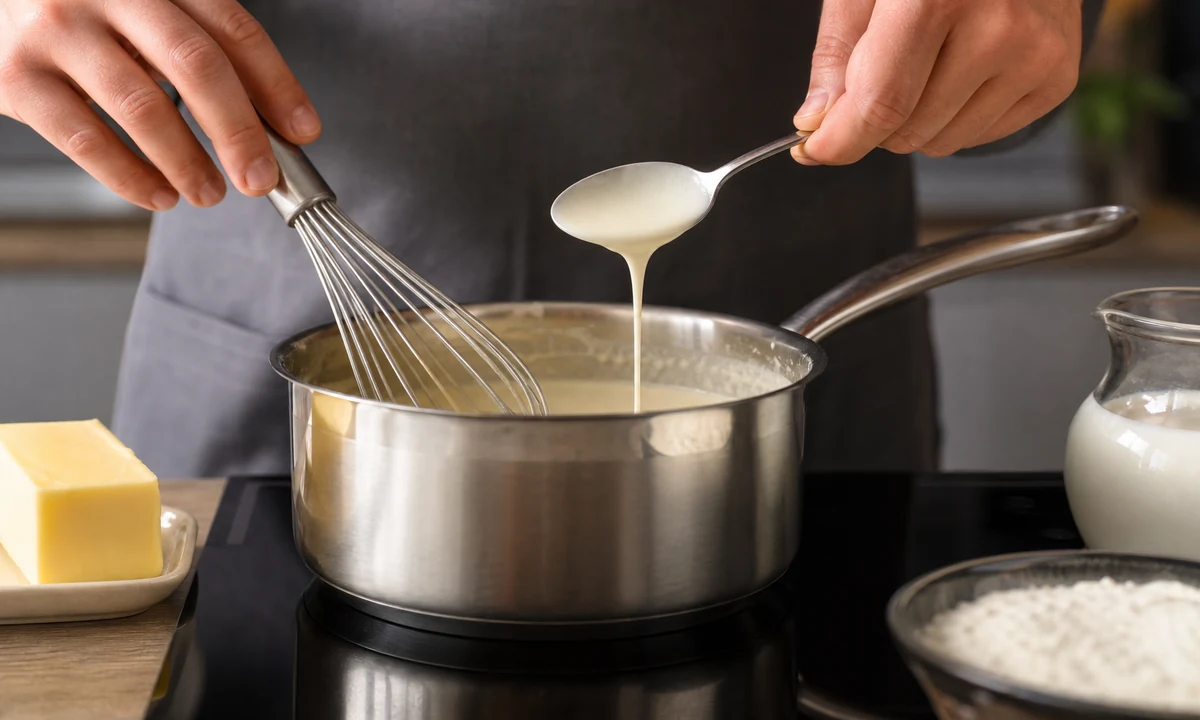
Reduction: the cleanest method
Boiling uncovered over medium heat evaporates water and concentrates flavor. Ideal for wine sauces, meat jus, or tomato. Stir occasionally so nothing sticks.
It takes longer than adding flour, but adds no ingredients or masks spices. If the sauce is already very salty, reduction intensifies it: adjust salt at the end.
- Medium heat, uncovered.
- Concentrates flavor and body.
- Watch salt if already high.
Cold starch slurry
Mix cornstarch or starch with cold water —one tablespoon starch to two water— and pour into boiling sauce while stirring. Boil 1–2 minutes to lose raw taste and see characteristic gloss.
Flour works similarly but needs more cooking time. Never dump dry starch into hot sauce: it will lump.
Butter, cream, and yolk
Monter au beurre: pull sauce off heat and whisk in cold butter cubes until emulsified. Cream thickens as it reduces and adds richness. Yolk tempered with a little hot sauce thickens without boiling to avoid curdling.
Roux —cooked flour and fat— is the base of béchamel and stable sauces for gratins.
- Slurry: starch + cold water.
- Mount with cold butter.
- Tempered yolk, no boil.
What to avoid
Thickening too much at once: easier to add than to thin. Raw flour in acidic tomato sauce without enough cooking. Freezing sauces thickened with lots of cornstarch: they may split when thawed.
Test consistency on a cold plate: it will look thicker than in the hot pot.
Editorially reviewed article · Happy Yumi · ZBMProject