
Cooking technique · Happy Yumi · 4 min
How to Read a Recipe Before You Start Cooking
A recipe is a map, not a novel: scan it like planning a trip. Understanding structure, terms, and real workflow avoids surprises mid-cook.
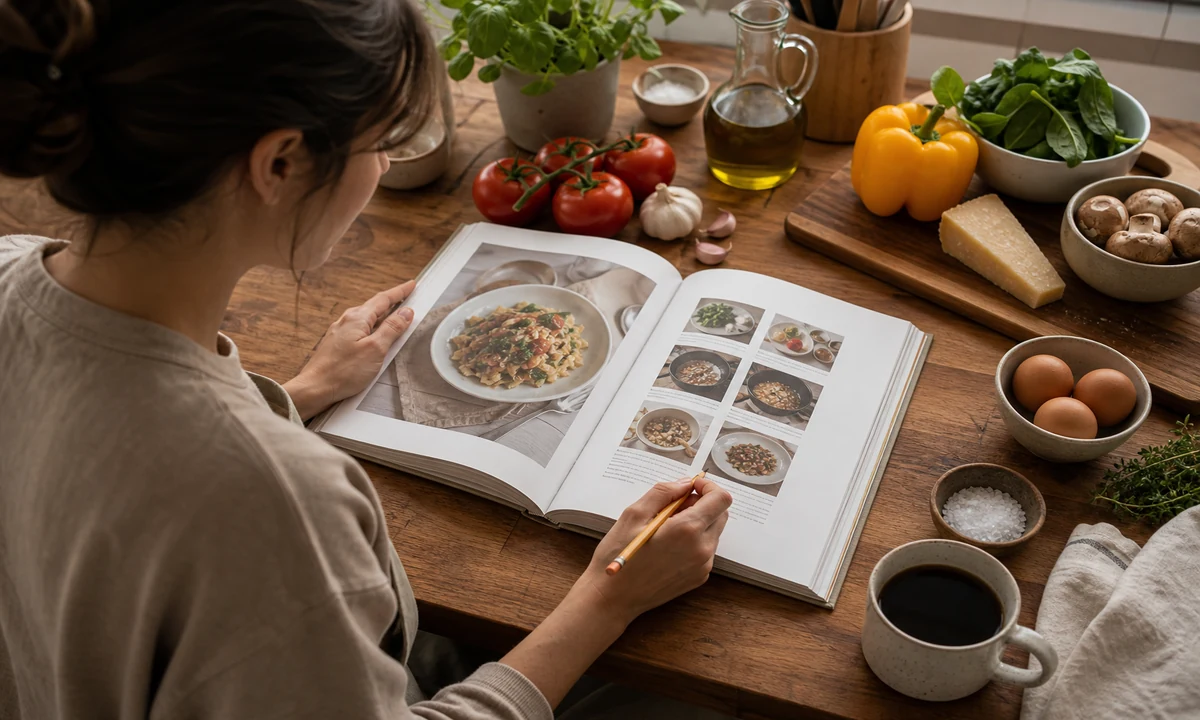
Typical recipe structure
Ingredient list with amounts, numbered steps, and sometimes times or yield. Ingredients usually appear in order of use, not importance. Notes at the end may hold critical substitutions or tricks.
Distinguish active time —chopping, stirring— from total time —includes oven or rest—. A cake may be 15 minutes work and 45 in the oven.
- Ingredients in order of use.
- Active vs total time.
- Read notes and variations.
Terms you should recognize
Al dente, brown, deglaze, blanch, whip, emulsify, reduce: each implies specific temperature and time. A spoon may be tablespoon —15 ml— or teaspoon —5 ml—; serious recipes use weight.
If a term is new, look it up before turning on heat, not during.
Planning from the recipe
Mark steps that can be done ahead: stocks, rested doughs, chopped vegetables. Identify bottlenecks: one oven and two dishes at 180 °C need sequencing.
Margin-note the real order: «1. chop, 2. preheat oven, 3. soffritto». Your personal list beats copying the recipe verbatim.
- Mark advance prep.
- Sequence limited equipment.
- Rewrite order if it helps.
Adapting with judgment
Substituting ingredients changes liquid, salt, and time: canned tomatoes are not fresh tomatoes. Doubling amounts does not always double oven time.
First time, follow closely; then adjust. Note changes that worked for your kitchen.
Editorially reviewed article · Happy Yumi · ZBMProject