
Cooking technique · Happy Yumi · 4 min
How to Scald Foods Step by Step
Scalding means briefly submerging food in boiling water — or intense steam — and, almost always, shocking it in cold water. It is a quick technique that cleans, slightly softens, or eases peeling without fully cooking the interior.
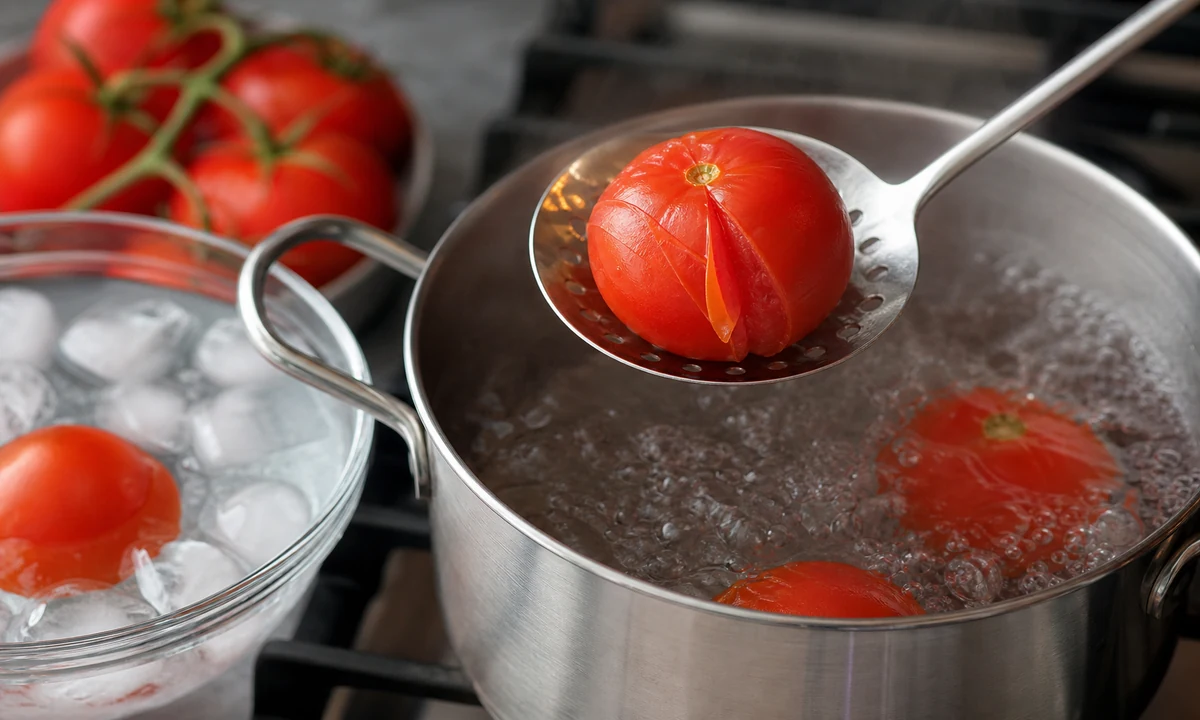
What scalding is for
It is used to peel tomatoes, peaches, or garlic easily; to remove impurities from meat or bones before making stock; and to set the bright green color of leafy vegetables before sautéing or freezing.
The brief thermal shock slightly breaks down the skin or surface without penetrating the food. That is why times are short: seconds or a few minutes, never the duration of a full cook.
- Peel tomatoes, peaches, and garlic easily.
- Clean meats or bones before clear stock.
- Set green color of spinach or beans before sautéing.
Water, salt, and temperature
Use a wide pot with plenty of water — at least one liter per 200 g of food — so it returns to a boil quickly when ingredients are added. A pinch of salt does not season the interior, but helps maintain color in vegetables.
Bring the water to a rolling boil before adding food. Work in small batches so the temperature does not drop. When the water boils again, start counting the time indicated in the recipe.
The cold shock: why it matters
After scalding, submerging in ice water or under cold running water stops cooking instantly. Without this step, residual heat would overcook the food and vegetables would lose their intense green.
For tomatoes, score the base, scald 30–45 seconds, shock, and peel with your fingers. For almonds or pistachios, scalding one minute makes it easy to remove the thin skin without breaking the nut.
Practical applications in your kitchen
Before sautéing spinach or green beans, scalding 60–90 seconds followed by a cold shock sets the color; then you can sauté in seconds without turning gray. For clear stocks, scalding bones or meat 2–3 minutes and rinsing removes dark foam later.
Do not confuse scalding with blanching: blanching is longer and aims to partially cook. Scalding is always brief and almost always followed by cold or another immediate process.
- Tomatoes: cross at base, 30–45 seconds, cold shock.
- Almonds or pistachios: 1 minute to peel thin skin.
- Leafy greens: 60–90 seconds before sautéing.
Editorially reviewed article · Happy Yumi · ZBMProject