
Cooking technique · Happy Yumi · 4 min
How to Blanch Vegetables Correctly
Blanching means briefly cooking vegetables in salted boiling water and stopping the cooking in cold water. It is the technique that keeps color vivid, texture crisp-tender, and prepares vegetables for freezing, salads, or a final sauté.
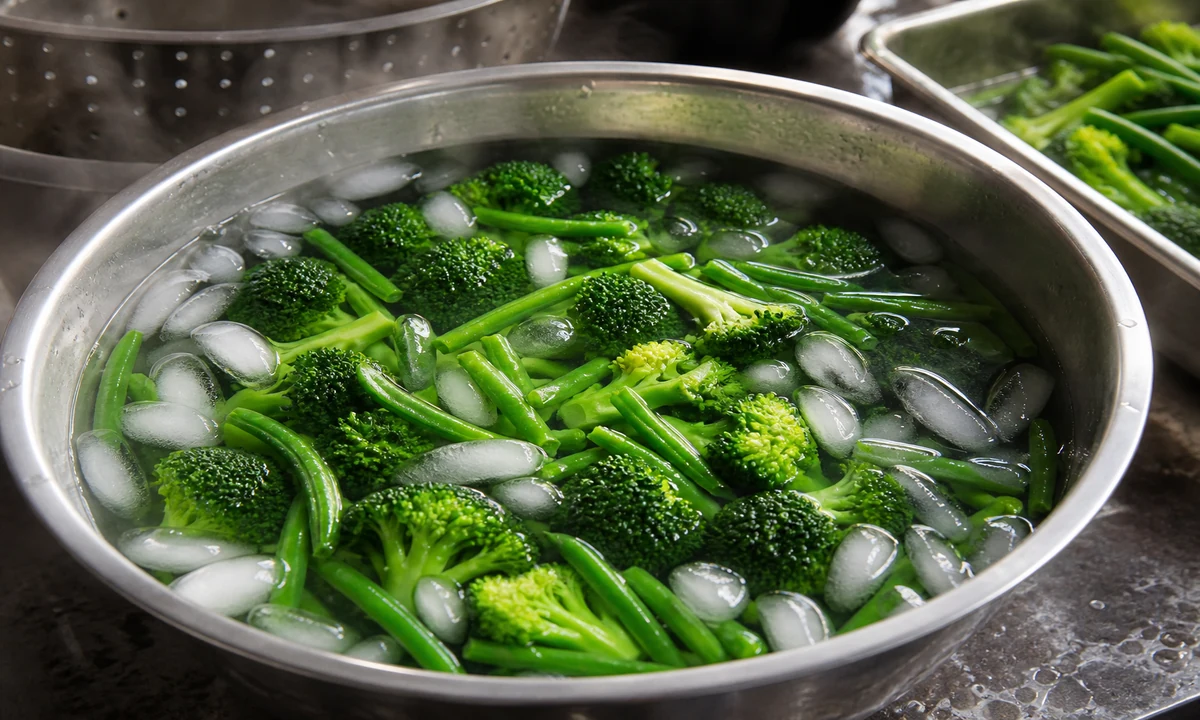
What blanching achieves
Boiling water deactivates enzymes that darken vegetables and slightly softens fibers without turning them to mush. The subsequent cold shock fixes color and stops cooking at the exact point.
It is ideal for broccoli, green beans, asparagus, peas, and chard. It also reduces volume to make rolling in fillings or freezer storage easier.
Water and salt ratio
Use plenty of water — at least 4 liters per kilogram of vegetables — so it returns to a boil instantly. Add generous salt: about 20 g per liter, like seawater. The salt does not penetrate much, but enhances flavor and helps set color.
Bring the water to a rolling boil before adding vegetables. Do not crowd them: cook in batches if needed so the water keeps boiling.
Reference times by vegetable
Each vegetable has its point. One extra minute turns crisp textures into something fibrous and dull.
Test with a skewer or taste a piece one minute before the maximum time; cut size also changes the result.
- Thin asparagus: 2–3 minutes; thick: 4–5 minutes.
- Broccoli florets: 2–3 minutes.
- Green beans: 3–4 minutes.
- Spinach: 30–45 seconds.
- Fresh peas: 1–2 minutes.
Cold shock and next steps
Prepare a large bowl with very cold water and ice. Drain vegetables from boiling water and submerge immediately. Stir to cool evenly; when cold to the touch, drain well.
You can sauté them right away, dress them in a warm salad, or dry and freeze on a tray before bagging — so they do not stick. Blanched frozen vegetables keep quality up to three months.
- Sauté right away with garlic or butter.
- Warm salad with vinaigrette.
- Freeze on a tray before bagging.
Editorially reviewed article · Happy Yumi · ZBMProject