
The national dish of the steppes of Central Asia (Kazakhstan, Kyrgyzstan), beshbarmak reflects the nomadic pastoral tradition, traditionally shared at large family gatherings and celebrations.
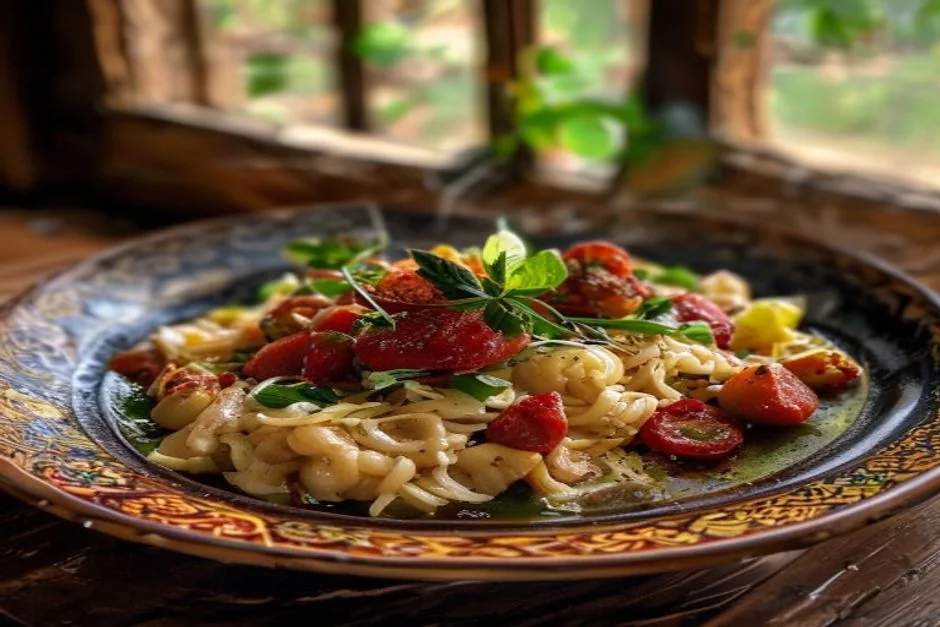
International
Beshbarmak
Traditional Kazakh meat and pasta beshbarmak, authentic Central Asian recipe step by step.
- Kazakhstan
- MAIN COURSES
- High protein
- medium
- gluten
30 min
Tiempo de Preparación
6
Servings
Nutrición por ración
- Calories 480 kcal
- Protein 32 g
- Carbohydrates 42 g
- Fat 20 g
Story behind the dish
Preparation
Beshbarmak is a preparation from Kazakhstan with medium difficulty. Reserve about 150 minutes in total (30 for mise en place and preparation, 120 for cooking). Follow the 6 phases in order: each step indicates what to do, what to observe and, when applicable, the time or level of fire.
Before you start
- Have ready: 1 kg of lamb or beef on the bone.
- Have ready: 500 g of fresh pasta dough (wide sheet type).
- Have ready: 2 onions.
- Have ready: Black peppercorns.
- Get ready: Laurel.
- Salt, oil and spices measured and within reach.
- Clean utensils, board and clear work surface.
-
Cook the meat in plenty of salted water
Cook the meat in plenty of water with salt, bay leaf and peppercorns for 1.5-2 hours until very tender, reserving the broth. Taste before serving: the balance between salt, acidity and fat defines the final result. Taste before serving: the balance between salt, acidity and fat defines the final result.
Taste before serving: the balance between salt, acidity and fat defines the final result.
-
Cut the fresh dough into rhombuses or wide sheets
Cut the fresh dough into rhombuses or wide sheets. The dough should be smooth and elastic; If it breaks when stretched, add liquid one at a time. The dough should be smooth and elastic; If it breaks when stretched, add liquid one at a time.
The dough should be smooth and elastic; If it breaks when stretched, add liquid one at a time.
-
Cook the pasta in the strained meat broth until al dente.
Cook the pasta in the strained meat broth until al dente. Go slowly and confirm texture, aroma and color before moving to the next step. Go slowly and confirm texture, aroma and color before moving to the next step.
Go slowly and confirm texture, aroma and color before moving to the next step.
-
Cut the onion into thin rings and blanch it briefly in the broth…
Cut the onion into thin rings and blanch it briefly in the hot broth to soften it. When it comes to a boil, adjust the heat to maintain a constant bubbling, not an uncontrolled boil. When it comes to a boil, adjust the heat to maintain a constant bubbling, not an uncontrolled boil.
When it comes to a boil, adjust the heat to maintain a constant bubbling, not an uncontrolled boil.
-
Shred or chop the cooked meat
Shred or chop the cooked meat. Go slowly and confirm texture, aroma and color before moving to the next step. Go slowly and confirm texture, aroma and color before moving to the next step.
Go slowly and confirm texture, aroma and color before moving to the next step.
-
Serve the pasta as a base
Serve the pasta as a base, covered with the meat and blanched onion, bathed with a little hot broth and fresh herbs. When it comes to a boil, adjust the heat to maintain a constant bubbling, not an uncontrolled boil. When it comes to a boil, adjust the heat to maintain a constant bubbling, not an uncontrolled boil.
When it comes to a boil, adjust the heat to maintain a constant bubbling, not an uncontrolled boil.
Chef's tips
- It is traditionally eaten with the hands ('beshbarmak' means 'five fingers'), hence its name.
- The meat cooking broth is served separately as soup (shorpa) before or with the main dish.
Variations
- Version with horse (traditional in certain regions).
- Beshbarmak with more blanched onion to taste.
Community
Kitchen conversations
Share how it turned out, ask questions, or reply to other cooks.
Be the first to share your experience with this recipe.