
Kongnamul muchim is bean sprout salad, one of the most basic banchan in South Korea. It has accompanied white rice for centuries as a source of economical vegetable protein. Its crunchy texture and sesame dressing make it indispensable on the Korean table.
Asian
Kongnamul muchim
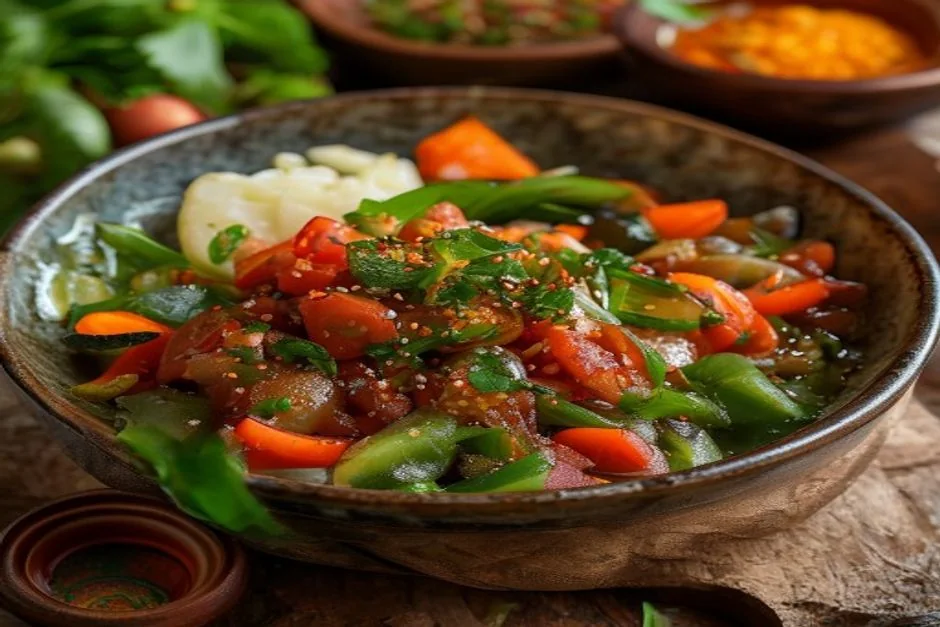
Kongnamul muchim: Korean bean sprout salad with sesame oil.
- South Korea
- MAIN COURSES
- Vegetarian
- Light
- Low fat
- easy
10 min
Tiempo de Preparación
4
Servings
Nutrición por ración
- Calories 95 kcal
- Protein 6 g
- Fiber 3 g
- Carbohydrates 8 g
- Fat 5 g
- Sodium 380 mg
Story behind the dish
Preparation
Kongnamul muchim is a South Korean preparation with easy difficulty. Reserve about 15 minutes in total (10 for mise en place and preparation, 5 for cooking). Follow the 6 phases in order: each step indicates what to do, what to observe and, when applicable, the time or level of fire.
Before you start
- Have ready: 400 g fresh bean sprouts (kongnamul).
- Have ready: 2 cloves of minced garlic.
- Have ready: 2 thinly sliced scallions.
- Have ready: 2 tablespoons of sesame oil.
- Have ready: 1 tablespoon toasted sesame seeds.
- Salt, oil and spices measured and within reach.
- Clean utensils, board and clear work surface.
-
Wash the bean sprouts well and remove roots if necessary.
Wash the bean sprouts well and remove roots if necessary.
-
Blanch in boiling salted water for 3 minutes until tender but…
Blanch in boiling salted water for 3 minutes until tender but crisp. When it comes to a boil, adjust the heat to maintain a constant bubbling, not an uncontrolled boil.
When it comes to a boil, adjust the heat to maintain a constant bubbling, not an uncontrolled boil.
-
Drain and immerse in ice water to preserve color and texture.
Drain and immerse in ice water to preserve color and texture.
-
Drain well and mix with garlic
Drain well and mix with garlic, chives, sesame, soy and vinegar.
-
Taste and adjust salt; add gochugaru if you want spicy
Taste and adjust salt; add gochugaru if spicy is desired. Taste before serving: the balance between salt, acidity and fat defines the final result.
Taste before serving: the balance between salt, acidity and fat defines the final result
-
Serve cold or at room temperature as banchan.
Serve cold or at room temperature as banchan. Let it cool for the indicated time: the structure settles and cuts or unmolds better.
Let it cool for the indicated time: the structure settles and cuts or unmolds better
Chef's tips
- Test for salt and doneness before serving; the last adjustment makes the difference.
- Use fresh and seasonal ingredients: the quality of the product is noticeable in the final result.
Variations
- Version with whole wheat pasta or brown rice for greater fiber content.
Community
Kitchen conversations
Share how it turned out, ask questions, or reply to other cooks.
Be the first to share your experience with this recipe.