
Ramen noodles came from China to Japan in the late 19th century, and tonkotsu (pork bone broth) style was developed in Kyushu in the 20th century, making it one of the most popular Japanese dishes in the world today.
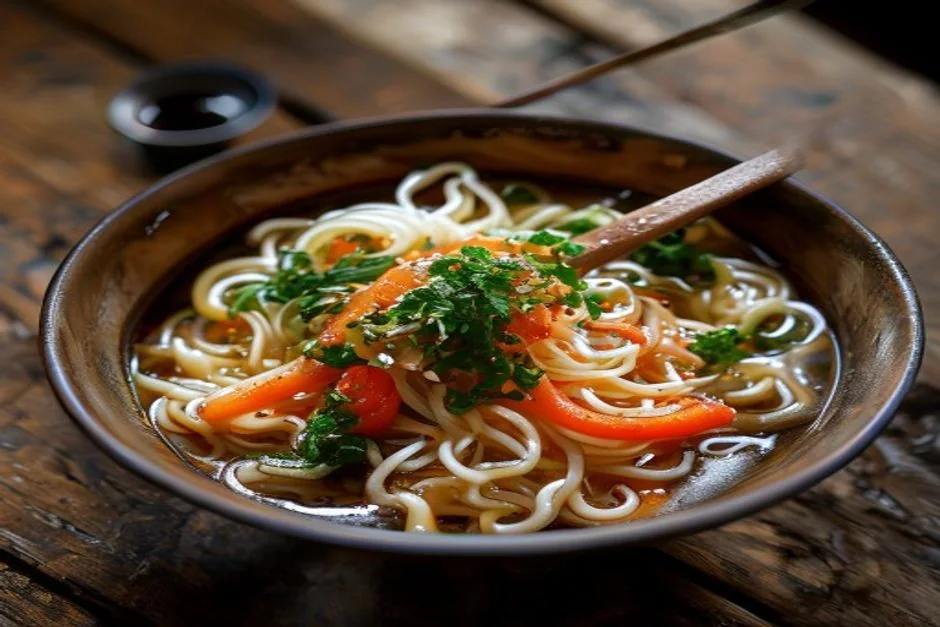
Japanese
Tonkotsu Ramen
Homemade Japanese tonkotsu ramen with creamy pork broth, complete traditional recipe step by step.
- Japan
- soup
- High protein
- medium
30 min
Tiempo de Preparación
4
Servings
Nutrición por ración
- Calories 620 kcal
- Protein 32 g
- Carbohydrates 54 g
- Fat 32 g
Story behind the dish
Preparation
Ramen Tonkotsu is a preparation from Japan with difficult difficulty. Reserve about 510 minutes in total (30 for mise en place and preparation, 480 for cooking). Follow the 6 phases in order: each step indicates what to do, what to observe and, when applicable, the time or level of fire.
Before you start
- Have ready: 1.5 kg of pork bones (legs and backbone).
- Have ready: 400 g pork belly (chashu).
- Have ready: 400 g fresh ramen noodles.
- Have ready: 4 eggs.
- Have ready: Soy sauce.
- Salt, oil and spices measured and within reach.
- Clean utensils, board and clear work surface.
-
Blanch the pork bones in boiling water for 10 minutes.
Blanch the pork bones in boiling water for 10 minutes, discard the water and rinse the bones well. When it comes to a boil, adjust the heat to maintain a constant bubbling, not an uncontrolled boil. In demanding recipes, do not improvise times: precision makes the difference. When it comes to a boil, adjust the heat to maintain a constant bubbling, not an uncontrolled boil.In demanding recipes, do not improvise times: precision makes the difference.
When it comes to a boil, adjust the heat to maintain a constant bubbling, not an uncontrolled boil.
-
Cook the bones in clean water over constant high heat (boiling…
Cook the bones in clean water over constant high heat (boiling vigorously, not simmering) for 8-10 hours, replenishing water as it evaporates, until you obtain a creamy white broth. When it comes to a boil, adjust the heat to maintain a constant bubbling, not an uncontrolled boil. In demanding recipes, do not improvise times: precision makes the difference.When it comes to a boil, adjust the heat to maintain a constant bubbling, not an uncontrolled boil. In demanding recipes, do not improvise times: precision makes the difference.
When it comes to a boil, adjust the heat to maintain a constant bubbling, not an uncontrolled boil.
-
Prepare the chashu by rolling and tying the bacon
Prepare the chashu by rolling and tying the bacon, browning it and cooking it in soy, mirin and water for 2 hours, then cool and slice. Let it cool for the indicated time: the structure settles and cuts or unmolds better. In demanding recipes, do not improvise times: precision makes the difference. Let it cool for the indicated time: the structure settles and cuts or unmolds better.In demanding recipes, do not improvise times: precision makes the difference.
Let it cool for the indicated time: the structure settles and cuts or unmolds better.
-
Marinate boiled eggs (with the runny yolk) in the cooking sauce…
Marinate boiled eggs (with runny yolk) in the chashu cooking sauce for several hours. Go slowly and confirm texture, aroma and color before moving to the next step. In demanding recipes, do not improvise times: precision makes the difference. Go slowly and confirm texture, aroma and color before moving to the next step. In demanding recipes, do not improvise times: precision makes the difference.
Go slowly and confirm texture, aroma and color before moving to the next step.
-
Cook fresh ramen noodles al dente according to package
Cook fresh ramen noodles al dente according to package. Go slowly and confirm texture, aroma and color before moving to the next step. In demanding recipes, do not improvise times: precision makes the difference. Go slowly and confirm texture, aroma and color before moving to the next step. In demanding recipes, do not improvise times: precision makes the difference.
Go slowly and confirm texture, aroma and color before moving to the next step.
-
Assemble the bowl with strained broth
Assemble the bowl with strained broth, noodles, laminated chashu, marinated egg, spring onion, nori and menma. Resting time is not optional: it improves texture, hydrates fibers and balances flavors. In demanding recipes, do not improvise times: precision makes the difference. Resting time is not optional: it improves texture, hydrates fibers and balances flavors. In demanding recipes, do not improvise times: precision makes the difference.
Resting time is not optional: it improves texture, hydrates fibers and balances flavors.
Chef's tips
- Constant, strong boiling (not simmering) is what emulsifies the fat and gives the tonkotsu broth its creamy white color.
- The broth can be frozen in portions to make quick ramen another day.
Variations
- Shoyu ramen (soy base, lighter broth)
- Miso ramen (with added miso paste)
Community
Kitchen conversations
Share how it turned out, ask questions, or reply to other cooks.
Be the first to share your experience with this recipe.