
Katsu is a Japanese adaptation of the Viennese schnitzel introduced during the Meiji era in the 19th century when Japan opened its doors to the West. Chicken katsu or chikin katsu became popular in the 1960s as an alternative to pork tonkatsu. It is an essential component of katsudon and Japanese school bento.
Japanese
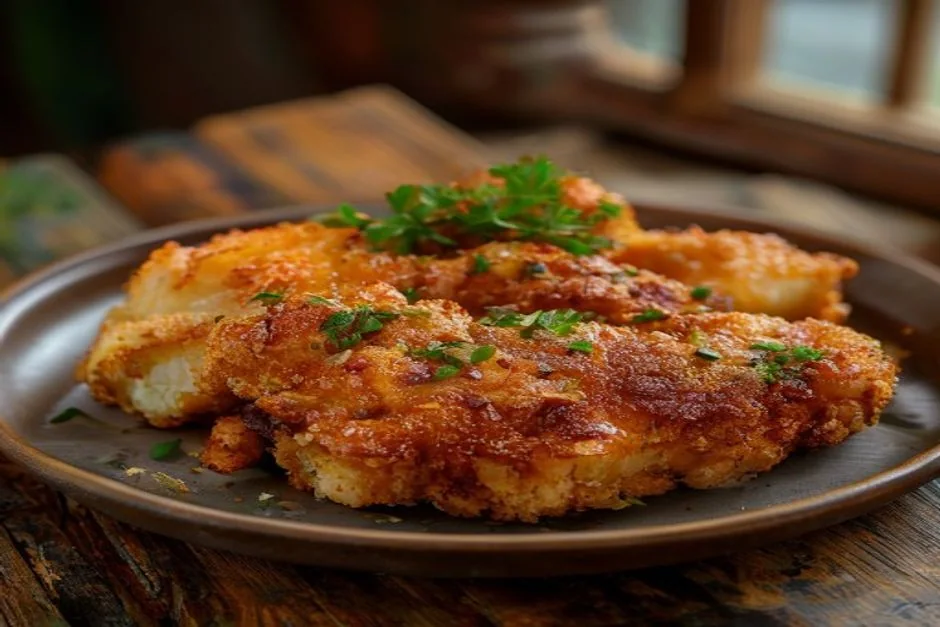
Chicken Katsu
Crispy chicken katsu with panko breadcrumbs, rice and tonkatsu sauce.
- Japan
- Main course
- High protein
- medium
20 min
Tiempo de Preparación
4
Servings
Nutrición por ración
- Calories 480 kcal
- Protein 40 g
- Fiber 2 g
- Carbohydrates 32 g
- Fat 20 g
- Sodium 780 mg
Story behind the dish
Preparation
Chicken Katsu is a Japanese preparation with medium difficulty. Reserve about 40 minutes in total (20 for mise en place and preparation, 20 for cooking). Follow the 7 phases in order: each step indicates what to do, what to observe and, when applicable, the time or level of fire.
Before you start
- Have ready: 4 flattened chicken breasts of 180 g.
- Have ready: 100 g of wheat flour.
- Have ready: 2 beaten eggs.
- Have ready: 150 g panko breadcrumbs.
- Have ready: Salt and black pepper.
- Salt, oil and spices measured and within reach.
- Clean utensils, board and clear work surface.
-
Flatten the breasts to 1 cm of uniform thickness
Flatten the breasts to 1 cm of uniform thickness, season both sides with salt and pepper.
-
Pass through flour
Dredge in flour, shake off excess, dip in egg and cover with panko, pressing well.
-
Fry in oil at 170 C for 5-6 minutes per side until golden and…
Fry in oil at 170 C for 5-6 minutes per side until golden and crispy. Look for a uniform golden color; The seal concentrates flavor and prevents it from releasing too much liquid later.
Look for a uniform golden color; The seal concentrates flavor and prevents it from releasing too much liquid later
-
Drain on rack or absorbent paper
Drain on rack or absorbent paper, rest for 2 minutes. Resting time is not optional: it improves texture, hydrates fibers and balances flavors.
Resting time is not optional: it improves texture, hydrates fibers and balances flavors
-
Cut into 2 cm strips maintaining the original shape
Cut into 2 cm strips, maintaining the original shape.
-
Serve over rice with shredded cabbage on the side.
Serve over rice with shredded cabbage on the side.
-
Serve with tonkatsu sauce
Serve with tonkatsu sauce, lemon and karashi.
Chef's tips
- Test for salt and doneness before serving; the last adjustment makes the difference.
- Use fresh and seasonal ingredients: the quality of the product is noticeable in the final result.
Variations
- Baked version with panko for less oil.
Community
Kitchen conversations
Share how it turned out, ask questions, or reply to other cooks.
Be the first to share your experience with this recipe.